
Have you ever heard of IMAX before? If you’re fond of watching 3D movies in cinemas, this term is not something new. However, even if you’ve known IMAX for a long time, differentiating 3D vs IMAX can still be a bit confusing.
In general, both 3D and IMAX deliver immersive viewing experiences to the audience. However, to get to know which one to go for, it’s best to learn more about each and dig deeper into these cinematic options.
Introduction: What is 3D?

In assessing 3D vs IMAX 3D better, it’s best to start with the former. What does it mean when you say 3D? You’ve probably gone to a 3D cinema with your polarized glasses to watch your favorite animated films appear like they’re coming out of the screen. This is actually the more common type of 3D experience many viewers have. The other type is known as the RealD 3D technology.
Normal 3D
Normal 3D utilizes the basic red and blue 3D technology through the polarized glasses you would often wear in standard 3D cinemas. The glasses filter what you can see and your brain processes the red left side and right blue side of your sight to appear three-dimensional.
The downside with normal 3D is that the quality is subpar and the visuals often look distorted with poor color production and restoration. The left sight where the red lens is can produce double images because it’s not capable of completely filtering the light. Because of this, experiencing headaches and dizziness while wearing polarized glasses and watching a 3D movie is normal, making the viewing experience terrible.
RealD 3D
Understanding RealD 3D is also necessary when assessing 3D vs IMAX because it is a type of 3D you can consider. In 2003, the American company RealD created its own 3D technology named RealD 3D, which involves a natively digital format created by adding polarizing films to the screen. This way, distortion, and double images can be avoided since the images come from further away the eyes. The visuals are converted and readjusted before they reach your eyes, free from ghosting and distortion. The earliest application of this 3D technology manifested in 2005 through the movie “Chicken Little.”
RealD 3D delivers clearer visuals that lead to a more enjoyable viewing experience for everyone. This becomes even more apparent once you compare it with its traditional counterpart (normal 3D). It is also much more comfortable, especially since you don’t have to use polarized glasses and feel eye fatigue due to watching the 3D movie.
Introduction: What is IMAX?

What is IMAX? Is IMAX 3D? These are some of the common questions often asked when people first hear about it. The truth is that IMAX is both the company and the imaging technology launched by the company. IMAX also refers to the format that plays 2D and 3D movies. It is specially crafted by the company using its unique and advanced supporting laser projection system. Understanding this little tidbit is a good way to compare 3D vs IMAX.
Derived from its 1986 analog counterpart, IMAX technology follows the same concept as the traditional 3D technology using polarizing filters. A laser projection system (with a 3-colored laser) is used to create a good-quality three-dimensional effect on the screen. With this 3D technology, viewers won’t have to tilt their heads to accommodate the screen’s format. Its curved design on the screen provides a more immersive viewing experience.
Currently, China has over 20 of these advanced IMAX screens while South Korea proudly has 10 IMAX screens, being two of the Asian countries that have multiple of these displays. Other Asian countries that have IMAX displays are The Philippines, with 4, and Singapore, with 1.
Assessing Normal 3D vs IMAX
Let’s understand the major differences between the normal 3D technology and IMAX. When discussing normal 3D vs IMAX 3D, it’s imperative to lay out their major differences. Here’s a summary of these major differences between normal 3D vs IMAX.
| Elements for Comparison | Normal 3D Technology | IMAX |
| Visual Quality | Low and very poor | Better quality |
| Viewing Experience | Poor and not enjoyable | More immersive |
| Possible Visual Issues | With distortion and ghosting | Free from visual issues |
| Effects on Eyes | Can cause eye fatigue | Less straining on the eyes |
| Add-on Tools | 3D glasses | More lightweight glasses |
RealD 3D vs IMAX 3D
Have you ever wondered which between RealD 3D and IMAX offers the better experience? RealD 3D is a jump from the traditional 3D technology but is it enough to surpass the advanced operation of IMAX? Here’s a quick summary of the differences between the two.
| Elements for Comparison | RealD 3D Technology | IMAX |
| Technology | Linear polarization technology | Similar but upgraded |
| Visual Quality | Clearer and more realistic than normal 3D | Much better quality |
| Audience Viewing Experience | Free from distortion issues | Much more immersive |
| Add-on Tools | Lightweight polarized glasses | |
| Cost | Expensive | More expensive |
Let’s dive deeper into each of these differences to get a closer look at this assessment of RealD 3D vs IMAX.
Technology & Visual Quality
RealD 3D operates in a similar manner as the IMAX technology. While RealD 3D is a milestone away from the normal 3D technology, it still can’t catch up to IMAX. The latter produces visuals more stunning and realistic than the former.
While both may use linear polarization in their operation, IMAX uses high-end equipment in its ensemble making a big difference in its performance. It also uses a three-colored laser to project and control the visuals on the screen. Its massive arc shape completes the ensemble that produces an immersive image.
Audience Viewing Experience
Another important aspect to assess RealD 3D vs IMAX is the level of the viewing experience. The latter provides a better viewing experience compared to the former because of its arc shape construction and more advanced 3D technology.
Add-on Tools
Both RealD 3D and IMAX require the use of polarized glasses to be able to watch 3D visuals. They both use lightweight 3D glasses that ease viewers from bearing the weight of the device.
Cost and Ticket Prices
How much do you need to pay to enjoy a 3D movie in IMAX and RealD? It can depend on the country and state you’re currently in and even the cinema you choose. If you go to a cinema in LA, expect to pay around $15.5 for RealD 3D and $19.50 for IMAX 3D.
The Cost of Enjoying 3D Movies
After diving into the differences between normal 3D and IMAX, let’s discuss RealD 3D vs IMAX based on their costs. Here is a summary of the costs of watching RealD 3D and IMAX in Singapore and Los Angeles in the United States.
| Countries for Comparison | Singapore (Lido Cineplex) | Los Angeles, USA (AMC) |
| RealD 3D Ticket Prices | $8 | $15.50 to $17.50 |
| IMAX Ticket Prices | $13 | $19.50 |
| Difference in Prices | $5 | $2 to $4 |
With these prices, it’s obvious that the ticket prices in the United States are more expensive than the ones sold in Singapore. One notable thing is the difference between the ticket prices, accounting for around $2 to $5 more. If you’re choosing RealD 3D vs IMAX 3D and you prioritize the cost in your decision, bear in mind this little fact.
What are people paying for in IMAX that costs extra? Here are some of the elements that make up for the $2 to $5 difference in prices:
- Larger screens used in IMAX cinemas (Mostly around 120 square meters)
- Better sound system
- Brighter visuals and images
- 2K dual-projector system (larger than the one used in RealD 3D)
The Popularity of Normal and RealD 3D Technologies
We can further discuss 4DX 3D vs IMAX 3D to expand the reach of this article but if you really want to get down to facts, focus on what makes the basic 3D technologies popular. It cannot be denied that IMAX technology is considerably better than the normal 3D technology. However, the old technology is still popular in many countries all over the world and the major reason behind that is economic.
Many countries, when assessing 3D vs IMAX, would choose the former because it is way more affordable than the latter option. The truth is that IMAX requires so much more than normal and RealD 3D technologies. You will deal with bigger screens and high-end components to form a high-quality ensemble. All of these factors will be taken into account when determining the price of the tickets.
Many countries are developing countries, which means that they are financially struggling. This is the reason why the majority of the world still prefers the more economical option– normal and RealD 3D movies.
Conclusion
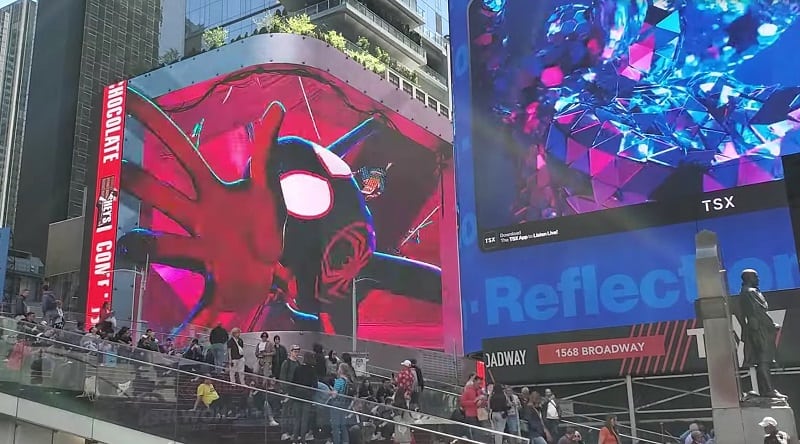
If you want the best viewing experience, you’d often have to choose 3D vs IMAX. With these choices, learn more about these two and what makes them different from the other. One thing you need to remember is that the former delivers a unique viewing experience while the latter is more immersive. For a more private experience, you can always get your own 3D LED screen at home if you have the budget to spare.


 English
  Russian
  Spanish
  Arabic
  German
  Korean
  French
  Portuguese
  Italian
  Persian
  Indonesian
  Turkish