
Have you ever seen your face displayed on a jumbotron screen the last time you watched a basketball or baseball game live? The Gillette Stadiums currently own the largest jumbotron installed at an outdoor stadium and the graphics are unreal. But which of the following offers the best customer experience, jumbotron vs LED video wall?
Jumbotrons and LED video walls are two massive display devices used today in different capacities. These large-format displays deliver incredible viewer experiences that make them in demand in the market, showcasing all types of content to audiences of all types.
If you’re wondering what large-format display to use for your next project, let’s look more deeply at these two types of displays and analyze which can help you best achieve your project goals.
Jumbotron vs LED Video Wall: Technologies & Their Revolution

What is the difference between the technology used in jumbotron screens and the ones used in LED video walls? When discussing jumbotron vs LED video walls, it’s important to take into account the technologies responsible for the masterpieces they showcase.
Evolution of Jumbotron Screens
Jumbotron screens are a staple in major stadiums and sports centers. The word “jumbotron” was first heard in 1980, when Sony coined the term and introduced the particular display technology under its brand. These massive displays first used the CRT (cathode ray tube) technology and as different technologies and innovations were introduced, they have also been integrated into jumbotrons. Even the latest LED modules have been integrated into some of the advanced jumbotron screens.
These massive displays have become a trend in major sports stadiums and centers, where they have become a status symbol. The content that these displays share will depend on the technology used in the jumbotron. This also includes the features and functionalities that can be explored.
Introduction of LED Video Wall Technology
An LED video wall is the realization of the LED technology integrated into a large display. If you compare the current technology used by jumbotron and LED video walls, they are now on the same level. While jumbotrons can use CRT and LED technology, LED video walls exclusively use LED technology.
LED video walls are designed to be advanced in their features. They use modular screens that can be arranged in a variety of shapes and sizes to accommodate the creative freedom of advertisers, brands, and marketers. More modular screens mean that the LED video wall is more massive. These screens work together to operate holistically and showcase the same content with cohesion.
Jumbotron vs LED Video Wall: Colors, Contrast Ratios, & Viewing Angle

These gigantic displays may seem the same but they can be very different. One factor that they differ from each other is their display quality, which can come in the form of video resolutions, colors, contrast ratios, viewing angles, and energy efficiency. These are some of the elements you can use to pit jumbotron vs LED video wall together.
To give you a glimpse at their basic differences, here is a summary of the display quality of each type of display.
| Display Quality | Jumbotron | LED Video Wall |
| General Video Resolutions | Larger pixel pitch & higher brightness | Tend to have a smaller pixel pitch |
| Colors | Often pop out and brighter | Often less colorful |
| Contrast Ratios | Broader & higher contrast ratios | Lower contrast ratios |
| Viewing Angles | Multiple angles with a wide set of viewing angles | Singular direction with a limited set of overall viewing angles |
| Energy Efficiency | Depends on the technology used | More energy-efficient |
Let’s take a closer look at these differences by going through all these elements one by one. Enumerating them and digging deep into each will give you a clearer view of their similarities and differences.
General Video Resolutions
In terms of video resolution, jumbotrons and LED video walls have similar clarity. The major difference though lies in the pixel pitch of the displays. Jumbotrons have larger pixel pitches compared to LED walls, primarily because they are structured to be viewed from afar.
Because jumbotrons are designed to be used outdoors in open fields and stadiums, they are often created to have higher brightness to operate even under sunlight exposure. Images, texts, and videos are still visible even under harsh lighting conditions.
Colors

Since jumbotrons are designed for outdoor use, they often have popping colors that can be clearly seen even in intense sunlight. Manufacturers pay special attention to this element so that the massive screen shows high-quality images.
Contrast Ratios
Another clear difference when pitting jumbotron vs LED video walls is their contrast ratios. The contrast ratio refers to the difference between the lowest and highest levels of brightness that can be used on the screen.
The contrast ratios of jumbotrons and LED video walls are different, in the sense that the former has a broader contrast compared to the latter. This means that jumbotrons have both lower and higher levels of brightness that can be set. It’s structured this way because jumbotron screens need to have enough brightness to operate outdoors.
Viewing Angles
Discussing the difference in viewing angles between jumbotrons and LED video walls can be a bit tricky. Standard LED video walls are often designed to face a singular especially since LED video walls are flexible with varying shapes and surfaces. You need to determine the type of LED video wall first before comparing it with jumbotron screens.
In terms of jumbotrons, they are designed to face multiple angles to accommodate all the viewers within the stadium or sports complex. Advanced jumbotrons are often comprised of several screens incorporated together. If you compare these screens with the standard LED video walls, jumbotrons are definitely the winner.
Energy Efficiency

A display’s energy efficiency relies heavily on the technology it uses. Older jumbotrons that use CRT technology have higher power consumption. However, newer jumbotrons are more energy-efficient since they now use LED technology. If you compare the newer jumbotrons with LED video walls, they are both energy-efficient. If you compare them in a general matter, including CRT tech jumbotrons, then it can be concluded that LED video walls win this aspect.
When considering the prices of the devices with jumbotron vs LED video wall, which is more expensive? Different factors affect the cost of these different types of displays. And these factors either increase or decrease the cost you have to pay to get the screens.
To cut it short, jumbotrons are significantly more expensive than LED video walls. This comes from the fact that the screen needs to be structured for outdoor operation, which includes higher brightness levels, a broader contrast ratio, and more vibrant colors. All these elements make sure that the jumbotron screens installed outdoors can operate effectively, where viewers can clearly screen whatever is shown on the display. However, it also means that the manufacturing process is more complex and more expensive, which gives justice to their high price tags.
In addition to its manufacturing, there are also costs you need to look at in the installation and maintenance of the jumbotrons. Jumbotrons are often placed overhead and in the center of stadiums and arenas for installation. It requires the construction of sturdy accessories that will carry the screens on top of the venues. And yes, this will cost a lot, not just the materials but also the actual installation.
Waterproofing is also necessary to protect the screen from weathering elements once they are installed outdoors. This is another expensive feature that’s a must for jumbotrons. Besides the installation, maintenance is also an expensive part of having a jumbotron screen.
All of these aspects point to the fact that jumbotrons cost more than LED video walls. One way to ease the worry of huge spending is to consider it an investment rather than a purchase.
Jumbotron vs LED Video Wall: Application
One of the distinct differences when pitting a jumbotron vs LED video wall is the application of each display. Some different events and areas are solely for jumbotrons and the same goes for LED video walls. While they may be similar in function, their features set them apart. Let’s look more closely at these differences in applications.
Where are jumbotron screens often used?
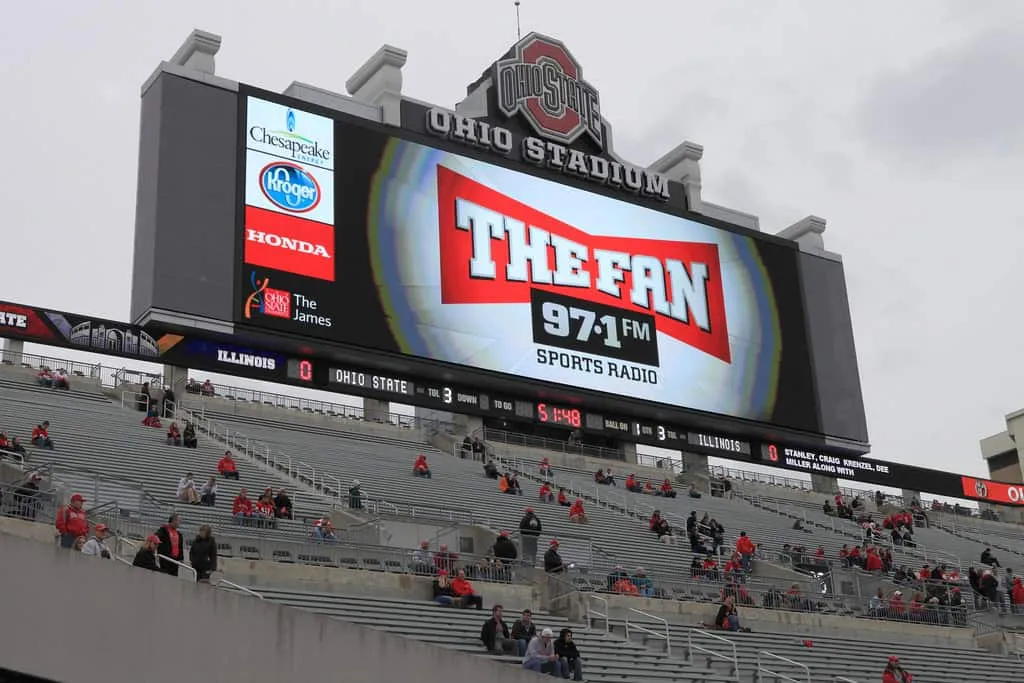
Jumbotrons are often installed at the center of venues, which is why these displays are popular for the following applications:
- Arenas and Sports Stadiums – Jumbotrons are the royalty of sports venues and they are all over stadiums and arenas because a majority of these displays are designed for such use. They are used to add engagement with the audience through zoom-ins, slow-mos, and instant replays in the game.
- Concert Outdoor Events – Jumbotron screens are often used in outdoor events, especially in concerts where a huge crowd serves as an audience. These displays are the perfect tool if you want to zoom into the performers on stage for everyone to see.
- People Urban Centers – These displays are also used in public spaces for information dissemination, especially in terms of important details like emergency alerts and status updates.
Where are LED video walls often used?

In comparing jumbotron vs LED video wall, the application for the latter is often indoors, which includes the following:
- Corporate Venues – From boardrooms to company lobbies, LED video walls provide the company with a positive image to everyone who visits the office. Jumbotrons will feel out-of-place in office space while LED video walls will turn your headquarters into a walk-in museum of marketing and advertisements.
- Display Control Rooms – Installing LED video walls in control rooms will provide a bigger avenue to display information all in one look. These control rooms can be under any industry or niche but the access to information is the same the consistently needed.
- Indoor Events – LED video walls are often installed indoors and that’s why they are more often used in indoor events compared to jumbotrons. They can serve as an advanced and convenient background for an event.
- Sales/Marketing Stunts – These displays can be used in a product launch to showcase the best that the brands offer. LED video walls will make your stunt more elegant and unforgettable for your target market.
Jumbotron vs LED Video Wall: Pros & Cons
To work on the challenge of pitting jumbotron vs LED video wall, looking at each of the display’s pros and cons will help.
Pros and Cons of Jumbotrons

You’d often see jumbotrons during live games when you watch your favorite sports. And these are its pros and cons:
Pros
- Massive screens that are ideal for large venues, massive events, and huge crowds
- Customizable and flexible in build – can be tailored to specific requirements
- Offers an optimal view since it’s easily visible in outdoor environments and venues
- Provides an elevated and livelier atmosphere at events
Cons
- Features a complex manufacturing and installation process
- Have higher prices because of the complex manufacture, added features, and complex installation and maintenance needs
- Requires more thorough maintenance work
Pros and Cons of LED Video Walls

LED video walls also have their advantages and disadvantages, which you need to learn about if you want to compare these displays with jumbotrons. These are some of the benefits and drawbacks worth looking into.
Pros
- Highly versatile compared to jumbotrons because of its modular feature
- Ideal to be used for indoor events and venues
- Highly scalable and can be structured in shape and size desired
- Cheaper than jumbotrons
Cons
- Might not be a good display option for outdoor venues and events
- High initial cost
- Requires meticulous and thorough maintenance
Jumbotron vs LED Video Wall: Which to Use?
If you need to decide on a jumbotron vs LED video wall, the easiest way to come to a decision is to meticulously look into several factors that will affect your usage of these screens. Here are some of the worth-noting aspects to check out.
Location
Where do you plan to install your screen? It will be a good first step in figuring out whether you will need a jumbotron or an LED video wall.
Large stadiums and arenas for major sports events and outdoor activities will require a jumbotron. When it comes to indoor venues and activities, LED video walls are preferred. While they can also work outdoors, these LED screens should be displayed indoors to avoid paying for extra fees, including waterproofing and installation specifications for outdoor use.
Overall Budget
How far can you stretch your budget for your display investment? Both jumbotrons and LED video walls can be expensive but the former takes the cake in terms of which display is costlier to have. If you have a tighter budget but need the je ne sais quoi to impress people at your event, LED video walls can do the job. However, if you have an unlimited budget, you can still consider jumbotron screens, especially if you’re thinking of an outdoor screen you can use.
Target Viewer & Audience
Who is your target audience and how far are they from where you plan to install your screen? For an audience located at a bit of a distance, the jumbotron delivers visual information better. For a closer audience, an LED video screen will do.
Maintenance
Do you have enough funds saved for their maintenance? Both jumbotrons and LED video walls require thorough maintenance so make sure you have enough money for that. The difference though is that if installed overhead, jumbotrons will require a more complicated maintenance process than LED video walls and so may cost more.
Conclusion
Discussing jumbotron vs LED video wall means looking into both of these screens and meticulously picking them apart. Jumbotron screens are prominent in sports stadiums and centers while LED video walls make incredible event attractions. Match your display needs with your choice of screen and make sure that your decision can achieve your project goals at the end of the day.


 English
  Russian
  Spanish
  Arabic
  German
  Korean
  French
  Portuguese
  Italian
  Persian
  Indonesian
  Turkish