
Nowadays, Display technologies enable filmmakers and producers to release movies of the highest quality, providing a unique viewing experience to their target audiences. Theaters and cinemas are also competing to provide the best cinema experience to patrons. Cinema owners worldwide invest in the best screens and display technologies to entice patrons to remain loyal and generate more revenues.
In this article, we’ll compare a giant screen vs IMAX screen. If you’re undecided about which type of screen to get, our article will provide advantages and drawbacks and some popular use cases for each screen. Let’s get to it!
What Is a Giant Screen?
Giant screens are displays that are larger than traditional theater screens. It is typically more comprehensive than traditional screens, providing more immersion to the viewers. Traditional screen sizes are wide enough to fit within the viewer’s central vision. In a giant screen theater, the viewing experience extends to the peripheral vision, making the film or experience more immersive.
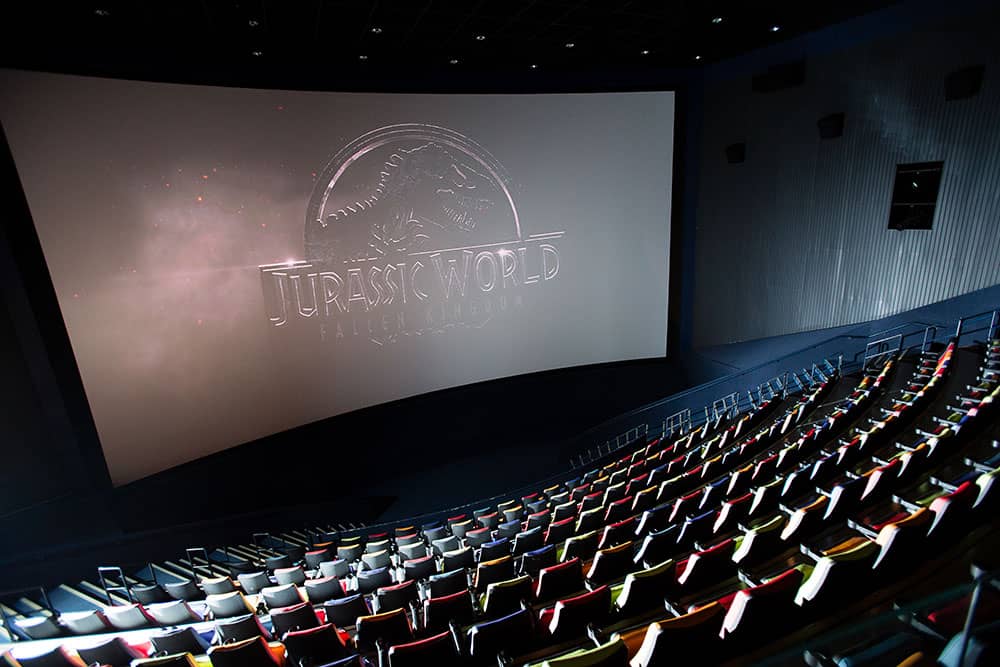
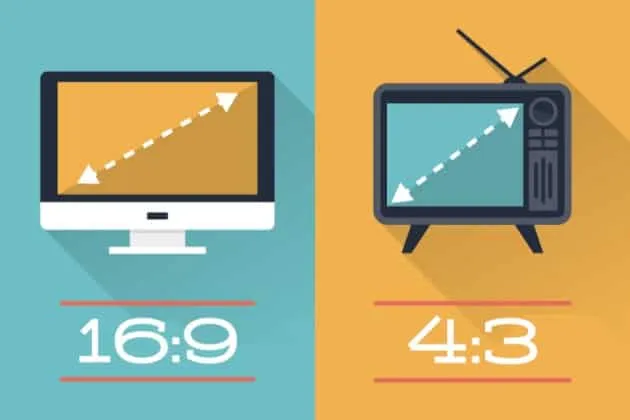
A traditional screen may look like a huge square if viewed from afar. Giant screens are more comprehensive than traditional ones, making them look like rectangles. The giant screen can also be flat or curved. A giant screen theater using flat screens doesn’t provide as much immersion as curved screens, and viewers away from the center of the theater may not have the best viewing experience.
On the other hand, curved screens provide more immersion and more convenient viewing for audiences on the theater’s far left or right.
The giant screen theater price depends on the size of the screen. Average prices range from $300 to $800 per square meter. Let’s assume the screen size is 21m x 11m or 231 square meters.
The average total cost for a giant screen ranges from $70,000 to $185,000 for the screen alone. You’d have to factor in other costs like shipping from the supplier’s warehouse, insurance, import duties, and taxes. Moreover, you also need to pay for installation, training, and maintenance.
The giant screen price estimate would be $90,000 to $200,000 as the total cost of buying a giant screen. However, you can still get better prices if you find the right supplier.
The most significant advantage of a giant screen is its flexibility. It can play most movies—both old and new. Here are some of the advantages that giant screens bring to the table.
Fits in Most Movie Theaters
Giant screens have size requirements, but they can fit most modern theaters. When you install a giant screen, you need extra spaces on each side of the theater. You may need minor renovations if you’re upscaling from a traditional screen. However, if you’re building a new theater that’ll house giant screens, you’ll need to account for the size of the screen plus allowances for future upgrades.
Has a Vast Library of Playable Movies
You can play a lot of films on a giant screen. This type of screen doesn’t require specific video formats. Hence, it can play standard high-definition or even 3D movies. This flexibility allows you to generate revenues in giant screen theaters and play various old and recently released movies. You can play new films as long as they’re in the standard video format.
Supports up to 4K Video Resolution
Playing films in 4K is such a treat. It produces crisp, clear, and vibrant video quality that makes you feel like you’re in the movie. Giant screens do well with 4K video content as long as it is in 4K. However, most giant screens nowadays can play 2K, Full HD, and HD videos, but they will not be as good as 4K videos. Playing 2K, Full HD, or HD videos on a 4K screen will not make the video 4K.
Film enthusiasts might notice immediately if a less than 4K video is played on a 4K screen. But for the general audience, it’s barely noticeable. Hence, playing 4K video content is recommended to maximize the screen’s capabilities.
While giant screens sound good, they also have drawbacks. Its biggest drawback is that it’s not as immersive as IMAX theaters. Let’s discuss some of the drawbacks of giant screens.
Is Not as Good as IMAX
Evidently, IMAX screens are better than giant screens in terms of video quality. IMAX screens can reach up to 8K resolution, making it ideal for films with many special effects or computer-generated imagery (CGI). Giant screens may produce good 4K films, but IMAX can do better.
May Be Less Immersive
Giant screens aren’t built to be immersive. They’re intended only to enhance the viewing experience through a larger screen. However, newer giant screens have incorporated curved designs to make it immersive. While it visually immerses audiences in the film, it doesn’t go on par with IMAX. But for general audiences on a budget, giant screens are pretty decent.
May Have Lesser Revenue Potential
While it’s true that giant screens have a vast library of playable films, it’s still a direct competitor to an IMAX theater. Giant screen theaters may experience a loss of revenue potential if an IMAX theater offers the same film but at IMAX quality. While some customers prefer a more affordable ticket with giant screens, avid filmgoers may opt for a more expensive ticket in IMAX in exchange for an excellent viewing experience.
What is an IMAX Screen?

IMAX screens are also massive screens if compared with giant screens. IMAX stands for Image Maximum and is not just a type of screen but also a brand. The IMAX Corporation develops and owns the IMAX brand and markets it as the IMAX Experience. The name “IMAX” is a magnet for avid moviegoers because every IMAX film doesn’t disappoint in quality and experience. IMAX is taunted as “The Gold Standard” in the cinema viewing experience.
The concept behind an IMAX screen goes back to our understanding of the human eyesight. We see the world using our two eyes. We immerse ourselves into the world through our right and left eyes working together to produce an image our brain understands. IMAX uses the same concept. It projects two separate images on the screen to mimic how the right and left eyes see things. The result is a crystal-clear image that almost feels like seeing the object on the screen as if it were in front of you physically.
IMAX has also revolutionized 3D Technology with its state-of-the-art projectors and polarized glasses. Its patented sound system enhances the viewing experience and immerses you in the world behind the screen. The lows are indeed lows, and the highs are indeed highs. Footsteps sound natural, and the waves can make you feel near the coast.
An IMAX home theater cost ranges from $400,000 to $1 million, depending on the size of the home theater. It is indeed for the rich people only. Building and installing a commercial theater may cost more than $1 million.
IMAX’s proprietary projection techniques and sound system make it a must-pick for a fully immersive movie experience. Its most significant advantage is its ability to make films more accurate to the audience. Here are some of the advantages of an IMAX screen.
Offers a More Immersive Viewing Experience
Because of the projection technology and patented sound system that IMAX uses, it can fully immerse viewers in the movie. IMAX makes it seem like it’s doing magic, where sounds and visuals go hand-in-hand to produce an unforgettable experience for the audience. Some cinemas house the IMAX Dome, a particular type of cinema wherein the screen extends to the roof.
The IMAX Dome provides a different level of immersion because the screen is not just in front of you but also above you.
Produces Excellent 3D Movies
IMAX offers the best 3D experience to the audience, and it has outstanding sound technology. Its polarized glasses are easy to wear, even for users with eyeglasses. The polarized glasses are comfortable to wear, and it doesn’t affect the overall movie experience.
Has Outstanding Sounds
Though we’ve repeatedly said that IMAX produces the best sounds, believe it when we say so because IMAX really did their homework. In the cinema, there’s a high chance that some users will be seated at the far left, far right, or far back. Given the size of the theater, the viewing experience might not be good at the awkward spots if compared to seating at the center, for instance.
However, with IMAX, their sound technology fills the whole cinema so that even those in the awkward spots can still feel the IMAX experience as they are seated at the center. The sound is even out; there’s no spot in the cinema where you’ll feel an imbalance.
While IMAX is excellent in many aspects, it has its drawbacks. Its biggest drawback is the cost because IMAX isn’t cheap to build. Let’s discover other of IMAX’s drawbacks.
Requires Specific Movie Formats and Cameras
To use IMAX technology, you need to use a special camera. This camera enables filmmakers and producers to produce IMAX-ready films. Though real prices aren’t disclosed publicly, IMAX cameras are said to cost around $500,000. With that hefty price tag, IMAX isn’t cheap and not for everyone. But if used to its full advantage, IMAX-ready films become instant blockbusters and recover not only 100% but 1000% of the camera’s cost.
Costlier Than Giant Screens
Because IMAX requires a unique projection technique, it uses a silver-coated screen. The projectors are also from IMAX and aren’t your typical movie projectors. These movie projectors mimic how human eyesight works, so it requires at least two projects. IMAX Domes have different projectors because of the unique screen size.
Needs More Theater Space
IMAX requires more theater space, especially for IMAX Domes. The screen must meet the requirements of IMAX so that the experience remains the same. Hence, old theaters or cinemas need more renovation to fit an IMAX screen. Aside from renovation, you need more budget to buy the screen and the projectors.
Giant Screen vs IMAX: At a Glance
| Giant Screen | IMAX | |
| Application | Giant screens have more applications and uses than IMAX screens. It is more affordable and accessible to buy with most screen manufacturers. | IMAX isn’t as accessible unless you have the resources to build an IMAX theater at home or for commercial purposes. |
| Screen Size | It can reach large sizes, but IMAX screens are still wider than giant screens. | IMAX screens are more comprehensive and taller than giant screens. For instance, IMAX Domes have a larger, curvilinear screen. |
| Theater Requirement | A modern theater can fit a giant screen without any problem. Older cinemas may want to renovate to have more space. | IMAX theaters require a specific layout to maximize users’ viewing experience and angles. Its sound system also depends on the size of the theater. |
| Immersion | Giant screens can be immersive if curved on the sides, but they’re never as immersive as IMAX screens. | IMAX is by far the most immersive cinema technology available to consumers. With IMAX 3D, users can enjoy 3D films on another level. |
| Ticket Costing | Tickets in a giant screen theater are not expensive but less affordable than traditional ones. | IMAX tickets are by far the most expensive. Some cinemas charge more for the ambiance and special recliner seats. |
| Content Variety | Most old and new movies can be played on a giant screen theater. | IMAX movies are shot for IMAX. There are not a lot of movies out there that are shot on IMAX cameras. |
Giant Screen vs IMAX: Best Use Cases for Each
Though each has its advantages and drawbacks, both types of screens are helpful in their respectful areas. For instance, while IMAX produces a better picture than giant screens, it isn’t ideal in most setups and uses. Here are some of the best use cases for giant and IMAX screens.
Giant Screen vs IMAX: Screen Size
WINNER: IMAX Screens
As discussed earlier, IMAX screens can have larger screen sizes than giant screens. The goal of IMAX is immersion, so a larger screen will help give that experience to its viewers.
Giant Screen vs IMAX: Theater Requirement
WINNER: Giant Screens
Getting a giant screen and putting it in a theater is easier. It doesn’t require specific fitting or requirements. There’s no complicated acoustics involved. Giant screens can also fit home theaters and are way more affordable than most IMAX theaters.
Giant Screen vs IMAX: Immersion
WINNER: IMAX Screens
Undeniably, IMAX screens are more immersive than giant screens. Since IMAX also uses sound to make you feel every moment in the film, IMAX can make you feel like you’re in the film, especially if it’s in 3D.
Giant Screen vs IMAX: Ticket Costing
WINNER: It’s a Tie
Ticket prices differ, and giant screen theaters or IMAX theaters may have the same prices. Cinemas have different gimmicks that can increase the ticket price, which doesn’t necessarily mean it’s because of IMAX.
Giant Screen vs IMAX: Content Variety
WINNER: Giant Screens
More movies can be played on the big screen. IMAX, movies must first be shot in IMAX in order to utilize the capabilities of the IMAX screen fully.
Conclusion
We hope this guide helped you understand the difference between giant screen and IMAX. We hope that you’ll arrive at an informed decision on which screen type you want to get. Giant screens are more accessible and affordable, but they are not as good as IMAX screens. On the other hand, IMAX produces a better picture, but it has unique requirements and it’s expensive.


 English
  Russian
  Spanish
  Arabic
  German
  Korean
  French
  Portuguese
  Italian
  Persian
  Indonesian
  Turkish