

Los Angeles LED Screen Rental Ultimate Guide
When staging an event, it is imperative that the visuals parallel the excitement. LED screen rentals then become really handy. From tech expos in Downtown Los Angeles to live events on the Strip, LED walls enable your message to be seen farther, appear better, and strike harder—even in broad daylight. This book addresses what you need to know about LED screen rental in Los Angeles and Las Vegas: how it operates, who it is for, and why a local partner may either make or destroy your event.
What Is an LED Screen Rental?
Renting an LED screen is exactly what it sounds like—you are leasing a high-resolution digital display for a one-time event. Usually measured in feet, not inches, these displays are constructed using modular LED panels that lock together to create huge video walls.

Whether it’s a 10-foot-wide inside stage backdrop or a 30-foot outdoor jumbotron, you are getting the rigging, controllers, wiring, and on-site assistance to run it seamlessly in addition to the screen. Usually running one day or over several weekends, most rentals cover delivery, setup, and disassembly.
For events when purchase makes no sense but maximum visual impact is non-negotiable, our plug-and-play option is perfect.
Who Rents LED Screens in Los Angeles and Las Vegas?
It’s not only the big name brands. LED video walls find use among many types of customers in Los Angeles and Vegas:
- Organizers of concerts and music festivals looking for vivid images that would hold under stage lights and sunlight.
- Marketing firms and corporate teams starting trade exhibits or product introductions.
- Organizers of private events, weddings, or nonprofit galas.
- Schools and churches needing temporary screens for graduations or services.
- AV experts and production companies working on film projects, fashion presentations, or pop-ups.
You are the type of client LED rentals were designed for if your audience requires viewing and constant engagement.
Why Choose a Los Angeles LED Screen Rental Company?
For cities like Los Angeles, speed, local expertise, and technical dependability count. When you work with a Los Angeles-based rental company, you’re getting backup when the stakes are high—not just hardware.
Onsite help with knowledge about the venue: Inside venues like the Crypto.com Arena or LA Convention Center, LA businesses know venue rules, power layouts, and ceiling rigging restrictions.
Whether coping with load-in delays or rain projections, local teams can quickly adjust—and occasionally provide replacements within hours.
Top-notch LA rental companies keep their panels clean, calibrated, and ready for showtime in areas with significant AV gear turnover.
LED Wall Rental vs LED Screen Rental: What’s the Difference?
The terms “LED screen” and “LED wall” are frequently used interchangeably in ordinary language, although there is a definite distinction in the rental industry. Knowing which one you need will also save you money and avoid problems if you are organizing an event in Los Angeles or Vegas.
Usually speaking, an LED screen is a whole system set on a transportable trailer or platform. Imagine a screen at a drive-in movie, sports tailgate, or outdoor performance where everything is pre-assembled. These are self-contained units—fast to install, simple to move, and best for outdoor pop-ups where speed counts more than pixel-perfect accuracy.

Conversely, an LED wall is a modular construction built from interlocking LED panels. Pieced together like tiles, these panels let you create enormous, flawless video displays in any shape or size. Usually utilized for indoor events, trade exhibits, stage backgrounds, and permanent installations are LED walls. Customized to your space and viewing angle, they are flown from the ceiling, ground-supported constructions, or trusses.
The real difference is as follows:
- LED screens are essentially portable and convenient.
- About scale, adaptability, and high-resolution performance are LED walls.
LED walls provide you more control whether you’re running dynamic content like motion graphics or video transitions, handling erratic venue layouts, or showing finely detailed images. Stick with LED screens, though, if your top focus is roll-up, power on, and go live quickly.
Popular Types of LED Video Wall Rentals in Los Angeles
In a market like Los Angeles, standard layouts fall short. You are renting a particular viewing experience catered to the crowd, the content, and the place, not only a screen. These are the most often used LED video wall rentals in Los Angeles, together with their ideal applications.
1. Indoor LED Video Walls
These are close-up viewing high-resolution displays. They abound in convention halls, theaters, galleries, and hotel ballrooms. Pixel pitch is the main statistic here; a sharp image at close range results from a smaller pitch, say 1.5mm or 2.6mm.
Ideal for:
- Commercial presentations
- Fashion shows
- Church presentations
- introductions of products
Indoor walls look dramatic even with the slightest details thanks to appropriate lighting management and calibration.
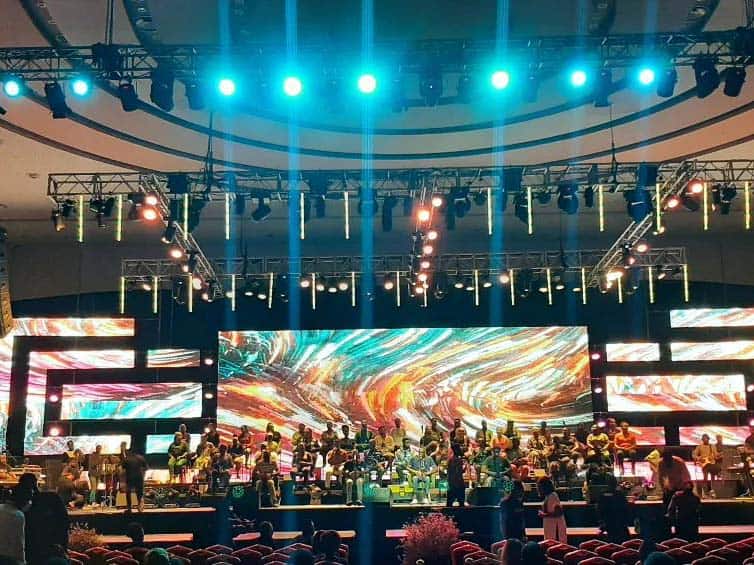
2. Outdoor LED Walls & Mobile LED Screens
The mainstay of outdoor events are these. Often 4,000+ nits, built with weather-resistant panels and more brightness settings, they are meant to punch through sunlight and retain performance rain or shine.
Most LA suppliers have trailer-mounted LED screens or mobile vehicles with built-in generators. Within one hour you can park, run, and power these.
Ideal for:
- Festivals and block parties
- Outdoor movie nights
- Marathons and sports events
- Political rallies or community events

3. Curved & Creative-Shaped Walls
Want anything outside the rectangle? High-end events use custom-shaped LED walls—curved, angled, or corner-stitched—increasingly to provide immersive experiences. Though the visual reward is great, these call very sophisticated rigging and content development.
Ideal for:
- Art exhibits and museum pop-ups
- Experiential brand activations
- Music videos and commercial shoots

4. Floor LED Panels (Interactive or Static)
You may indeed hire walk-on LED panels. These pressure-rated, strengthened, high foot traffic units are Certain are touch-sensitive and able to react to motion or set off video effects.
Ideal for:
- Trade show booths
- Immersive installations
- Stage runways

How to Choose the Right LED Screen for Your Event
The fact most sellers will not tell you is that not every LED screen fits every event; hence, selecting the wrong one will compromise your whole visual experience. We have seen it occur. At a daytime event, washed-out images, overheated screens mid-show, or too coarse resolution for a tiny space. Here’s how actual experts choose what to employ if you want to prevent those blunders.
1. Always start with viewing distance.
Measure, not speculate. Tighter pixel pitch—like 2.6mm or even 1.9mm for ultra-clear visuals—is what you want if your audience will be 20 feet or closer to the screen. Anything more than 4mm begins to seem blurry up close. A 5mm+ pitch is good for big gatherings at events or outdoor demonstrations; you are exchanging scale and brightness rather than detail.
2. Check the venue’s rigging capacity.
Not every site can manage large LED walls. In Los Angeles hotels we have worked in, ceiling points could only hold three hundred lbs per section. Ground support trussing is then your friend. If space is limited, though, take into account modular stacking or perhaps a mobile screen rather than flying the wall.
3. Match the content to the format.
The parameters of a stationary slide deck differ from those of a high-motion video loop or IMAG (live camera feed.). Should you be streaming live video, you will require low latency screens, appropriate processing gear (such as Novastar or Brompton), and a qualified technician equipped to quickly solve sync problems.
4. Factor in ambient light and power access.
Sunlight can erase the effect on a screen. If you are outside, minimum brightness should be 4,500 nits—and that is non-negotiable. Don’t undervalue power demands as well. One 10x 6 panel wall can pull over 30 amps each circuit. Verify power access at the venue early on or carry a distribution box filled with fresh feeds.
LED Video Wall Rental Cost in Los Angeles & Las Vegas
You most likely question about the expenses involved. Thus, the solution is clear-cut upfront:
Depending on size, pixel pitch, and setup difficulty, most LED screen rentals in Los Angeles or Vegas range in daily cost between $2,000 and $7,000.
That serves as the basic rate. Once you start to dig, the cost actually divides like this:
Screen Size & Resolution
Running a basic 10×6 ft LED wall (about 18 panels, 2.9mm pitch) might run you $2,500 daily including setup. Turn to a 20×10 foot wall. Now you fall in the $5,000–$6,000 daily range—especially if you require a unique configuration with front-serviceable panels.
Indoor vs Outdoor Use
Made to withstand wind, heat, and rain, outdoor-rated panels (IP65 or above) Higher brightness and stronger structures also accompany them, which increases cost by 15 to 30 percent relative to indoor choices.
Add-Ons & Tech Requirements
Prices can shoot up fast if you need:
- Live camera integration (IMAG) and switching gear
- Signal scaling, media servers, or custom pixel maps
- On-site video engineers or standby techs
- Ground support truss, scaffolding, or flying points
Expect to pay $500–$1,200 extra/day for full-service packages with crew.
Las Vegas Costs: Slightly Higher
Demand in Vegas peaks during major conventions (CES, NAB, etc.), therefore peak rates are closer to $3,000 to $8,000 per day, particularly for multi-day installations with same-day deconstruction policies.
Renting vs Buying an LED Wall: Which Makes Sense?
The industry rule of thumb is: avoid buying an LED wall if you do not require one at least 10–12 times a year. Renting is far less expensive, less dangerous, and far simpler to run.
Here’s how we breakdown this choice, which we have guided manufacturing companies as well as corporate clients.
Buying Only Makes Sense If You Have:
- A recurring calendar of events (think: weekly services, national tours, trade show circuits)
- A dedicated AV team that can handle transport, setup, calibration, and content syncing
- Secure storage with climate control and power testing access
- Budget for backup parts, replacement modules, and updated processors every 2–3 years
Renting Covers More Than Just the Panels
Renting also gets you:
- On-site tech support and fast swaps if anything fails mid-event
- Newer-generation panels calibrated and tested for your specific show
- Insurance, trucking, crew, and teardown—all bundled
- No maintenance, no downtime, no storing a 2,000-lb truss setup in your warehouse
FAQs About LED Screen Rentals in Los Angeles & Las Vegas
How early should I book an LED screen rental?
Two to four weeks ahead is best for regular rentals. Book at least six weeks ahead if your event falls inside highly sought-after windows, such as CES in Las Vegas or awards season in Los Angeles. There are last-minute rentals, however availability becomes restricted and rush fees may be charged.
Can I rent for just one day?
Yes. Day-rate packages, including choices for single-day or multi-day use, are provided by most rental providers. Just be advised that whether you rent for one day or three, setup and teardown labor are often the same; thus, the cost per hour of real use increases with the shorter rental.
What’s included in a typical LED video wall rental?
A full-service rental typically includes:
- LED panels
- Video processor (e.g., Novastar or Brompton)
- Truss or support structure
- Cabling and power distro
- Setup and teardown crew
Some companies also include an on-site technician to handle playback or troubleshooting during your event. Always clarify whether the quote is “dry hire” (equipment only) or turnkey.
Can the screen display live video or livestreams?
Yes. Though most LED walls allow live video feeds, camera switching, and livestream integration, you will need the correct processing gear and a video specialist that knows signal flow. Before testing your material, find out from your vendor what format they prefer—HD-SDI, HDMI, etc.?
Is permitting required for LED screens in Los Angeles or Las Vegas?
Sometimes. Public outdoor LED walls—sidewalk, plaza, street—often call for local permits, particularly if they include staging, traffic closure, or power drops. Generally speaking, indoor or private venue configurations do not. Knowing local codes will help your rental business determine whether permission is required.
Do I need to provide content in a specific format?
Yes. Usually running HDMI, SDI, or media servers, most LED processors accept 1080p or 4K video files. Although usual file formats are MP4 or MOV, it is advisable to verify aspect ratio and playback resolution ahead of time. Certain companies provide formatting or content optimization tools; inquire early to avoid scrambling the night before.
Conclusion
Anyone may rent you a screen in areas like Los Angeles and Las Vegas; yet, not everyone can perform under pressure. The true worth goes beyond the LED panels in everything from venue rigging and real-time tech assistance to weather-proof setups and last-minute content modifications. In the execution is where it counts.
Work with a rental team that understands the local topography, has great inventory, and can respond to difficult issues before you ever ask them if you are organizing a high-stakes event where visuals must fail.
The right screen invites the audience in. The right partner ensures their continued engagement.
Tell me whether you want the internal link map, meta description, or schema markup for this page.


 English
  Russian
  Spanish
  Arabic
  German
  Korean
  French
  Portuguese
  Italian
  Persian
  Indonesian
  Turkish